
Over the years, quite a few people have asked me about my experience applying for SBIR/STTR grants.
Since I’ve learned many lessons through trial and error, and after winning 6 SBIR/STTR awards since my first NSF STTR grant in 2014, I thought it’s time to share what I’ve learned.
Here are some key takeaways that might help if you’re planning to apply:
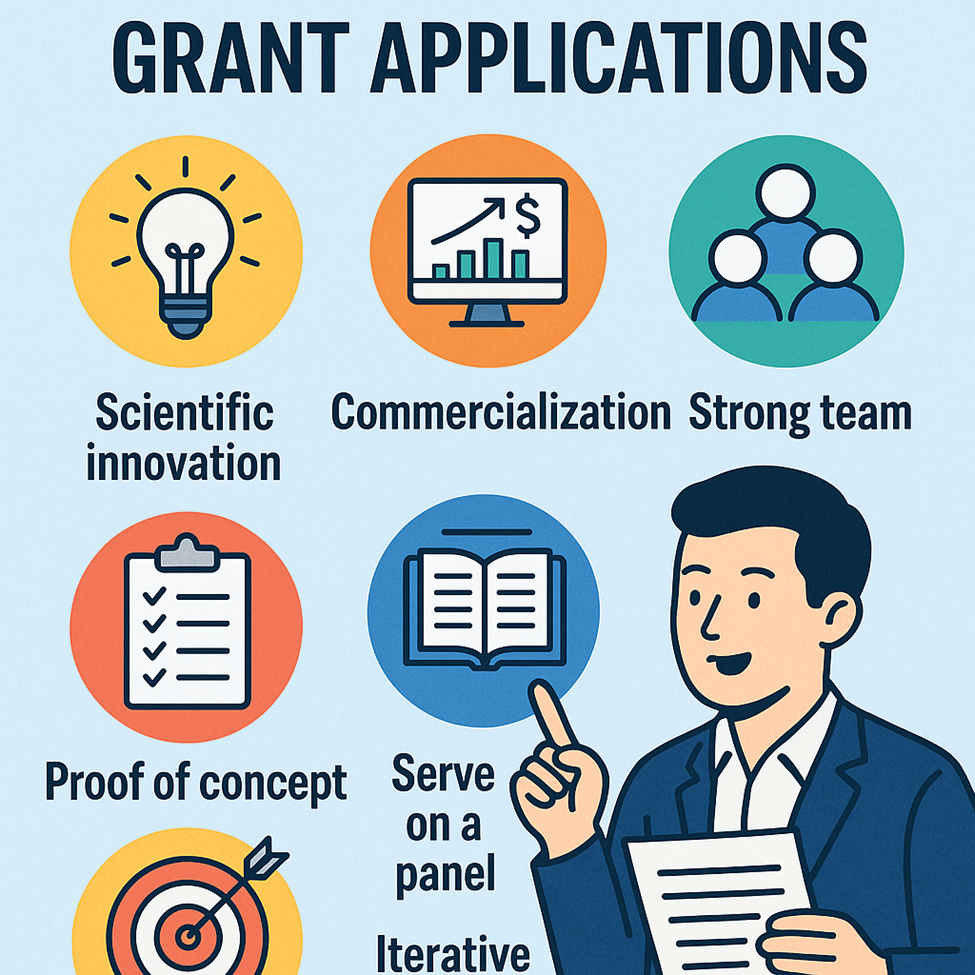
1️⃣ Emphasize scientific innovation.
SBIR/STTR programs fund novel technologies. Strong publication records and a clear demonstration of innovation will make your proposal stand out.
2️⃣ Show the commercial potential.
These grants are for small businesses. You must articulate a viable commercialization path including the market need, unmet gaps, and potential market size.
3️⃣ Build a complementary team.
A balanced team with both technical and business expertise is essential. Many proposals fail because the business side is weak.
4️⃣ Understand the phase differences.
Phase I focuses on proof of concept (science matters most).
Phase II emphasizes business readiness and a strong commercialization plan becomes critical.
5️⃣ Serve on a review panel if you can.
It’s one of the best ways to learn how reviewers think and a great way to give back to the community.
6️⃣ Don’t be discouraged by rejection.
Most successful applicants weren’t funded on their first try. Read the reviewers’ comments carefully, talk to your program officer, and improve your next submission.
💬 I plan to elaborate on some of these points in future posts.
If you’ve applied for SBIR/STTR before — what lessons did you learn?
Or if you’re considering it — what’s your biggest question?
#SBIR #STTR #Innovation #Entrepreneurship #ResearchFunding #NSF #Startups